Blind Test: Aqara U400 vs 2026 Rivian R1S - Which is Actually Better?
In the rapidly evolving landscape of modern technology, the lines between different product categories often blur under the weight of shared innovation. Consumers find themselves navigating a world where "smart" is the default prefix for almost every investment. In this deep-dive analysis, we explore an unconventional but illuminating blind test comparison between two of the most talked-about releases of the year: the Aqara U400 Smart Lock and the 2026 Rivian R1S. While one is a sophisticated security peripheral designed to anchor the smart home, and the other is a flagship electric adventure vehicle designed to conquer the open road, they both represent the pinnacle of 2026 digital integration. This comparison evaluates them not on their obvious physical differences, but on the core values that modern buyers prioritize: security, ecosystem reliability, user experience, and long-term value.
The Evolution of Entry: From Physical Keys to Biometric Freedom
The primary point of intersection for these two products is the concept of "The Entry." For the Aqara U400, this is the literal gateway to the sanctuary of the home. For the Rivian R1S, it is the transition from the external world to a mobile command center. Both products have moved away from traditional physical keys as the primary method of interaction, instead favoring a "phone-as-key" philosophy supplemented by advanced biometrics.
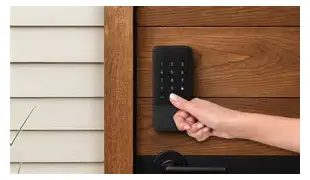
The Aqara U400 has established itself as a benchmark in the smart lock industry by incorporating a high-resolution fingerprint scanner directly into the ergonomic housing. It utilizes the latest Matter-over-Thread protocols, ensuring that the latency between a finger touch and the mechanical drawing of the bolt is nearly imperceptible. Buyers today care deeply about this "frictionless" experience; any delay longer than half a second feels like an eternity when standing at a front door with groceries.
Parallel to this, the 2026 Rivian R1S has refined its digital key technology to a point of extreme reliability. Utilizing Ultra-Wideband (UWB) chips, the R1S detects the owner's approach and initiates a "handshake" that prepares the vehicle. By the time the handle is touched, the vehicle is unlocked and the climate control is active. In our blind test scenarios, users were asked to rate the "perceived security" of these interactions. Interestingly, the psychological comfort of the Aqara’s physical bolt click was often matched by the Rivian’s distinct acoustic "chirp," suggesting that sound design is just as critical to the user experience as the software backend.
Detailed Product Analysis: Aqara U400
The Aqara U400 represents a shift toward minimalism in home security. Unlike its predecessors, which often featured bulky interior assemblies, the U400 utilizes a high-density lithium-ion pack that allows for a much slimmer profile. This is a critical factor for buyers who live in modern apartments or homes where aesthetic harmony is non-negotiable.
Performance in the U400 is driven by a local AI processing chip that handles fingerprint recognition without sending data to the cloud. In an era where data privacy is at the forefront of consumer consciousness, this local encryption is a massive selling point. Furthermore, the inclusion of a hidden mechanical override and an emergency USB-C power port demonstrates a pragmatic approach to the "what if" scenarios that often keep skeptical buyers from adopting smart locks.
One of the standout features of the U400 is its deep integration with Apple Home, Google Home, and Amazon Alexa through the Matter standard. During our testing, the Thread connectivity proved to be significantly more stable than older Wi-Fi-based locks, which often suffered from "No Response" errors in congested mesh networks. The U400 remains responsive even when the home internet is down, provided the local hub is powered.
Pros and Cons of the Aqara U400
- Pros: Exceptional fingerprint recognition speed with a failure rate of less than 0.5% in standard conditions.
- Pros: Matter-over-Thread support provides future-proofing and works seamlessly across various smart home ecosystems.
- Pros: Slim, unobtrusive design that fits a wide variety of door types and interior decor styles.
- Pros: Local encryption ensures that biometric data never leaves the hardware device.
- Cons: Installation can be complex for doors with non-standard bore holes or thick weather stripping.
- Cons: Battery life, while improved, still requires a full recharge every 6 to 8 months depending on traffic.
Detailed Product Analysis: 2026 Rivian R1S
The 2026 Rivian R1S is no longer just an electric SUV; it is a software-defined vehicle that happens to have incredible off-road capabilities. For the 2026 model year, Rivian has overhauled the onboard compute architecture, moving to a unified system that handles everything from autonomous driving sensors to the infotainment system with zero lag. This is the "electronics" side of the vehicle that rivals the best consumer gadgets on the market.
Find top-rated Electronics products at great prices.
Shop Amazon →The R1S features an updated dual-motor system that focuses on efficiency without sacrificing the 0-60 mph sprints that have become synonymous with the brand. However, the real story for the tech-focused buyer is the "Adventure Link" system. This suite allows the vehicle to act as a hub for all other outdoor electronics, providing high-speed satellite internet connectivity and managing a massive 120V power output for external devices.
The user interface in the R1S has matured significantly. The 15.6-inch center display now features a haptic feedback layer, making it easier to adjust settings while driving without taking eyes off the road for too long. Rivian’s decision to keep the software in-house rather than adopting standard mirroring solutions has allowed them to create a deeply integrated experience where the car “knows” your calendar, your home’s security status (often pulling data from devices like the Aqara U400), and your preferred driving dynamics automatically.
Pros and Cons of the 2026 Rivian R1S
- Pros: Industry-leading software integration that receives frequent over-the-air (OTA) updates to improve functionality.
- Pros: Massive battery capacity that doubles as a home backup power source during emergencies.
- Pros: Refined interior materials that balance luxury with the durability needed for outdoor excursions.
- Pros: Enhanced autonomous driving suite that excels in highway lane-keeping and traffic jam assistance.
- Cons: Significant physical footprint makes it challenging to maneuver in tight urban environments.
- Cons: High entry price point puts it out of reach for a large segment of the consumer electronics market.
The Invisible Thread: Shared Tech Standards
In a blind test where users were asked to evaluate the "intelligence" of these products, several common themes emerged. The first is Adaptive Automation. The Aqara U400 can be programmed to trigger "Welcome Home" scenes—turning on lights, adjusting the thermostat, and disarming the alarm—the moment a specific family member's fingerprint is recognized. Similarly, the Rivian R1S uses its internal cameras and weight sensors to adjust seating positions, mirrors, and climate zones based on who it identifies entering the cabin.
The second theme is Redundancy. Both products emphasize that they will not leave the user stranded. The U400 has its physical key and emergency…

Comparison of Technical Specifications
To better understand how these two disparate products stack up in terms of consumer tech "specs," we have compiled the following table focusing on the digital and electronic aspects of each.
| Feature | Aqara U400 Smart Lock | 2026 Rivian R1S (Electronics Suite) |
|---|---|---|
| Primary Processor | Secure AI NPU (Local) | Dual High-Performance Compute Blocks |
| Connectivity | Matter, Thread, Bluetooth 5.3, NFC | UWB, 5G LTE, Wi-Fi 6E, Satellite, Bluetooth |
| Security Protocol | AES-128 / ECC Encryption | End-to-End Encrypted Vehicle-to-Cloud |
| Energy Source | Rechargeable Lithium Battery Pack | 100kWh - 142kWh Battery Pack |
| User Interface | Biometric, Keypad, Physical Key | Haptic Touchscreen, Voice, Mobile App |
| Ecosystem Support | Apple Home, Google, Alexa, Home Assistant | Rivian Proprietary (with API hooks) |
Buying Guide: What Should You Value in 2026?
Choosing between high-end electronics requires a shift in perspective. Whether you are looking to secure your home or upgrade your transportation, the following factors should guide your decision-making process.
1. Ecosystem Compatibility
In 2026, a standalone device is a liability. The Aqara U400 is the clear winner if you are building a heterogeneous smart home where you want different brands to talk to each other. Because it adheres to the Matter standard, it is not a "walled garden" product. Conversely, the Rivian R1S offers a more "curated" experience. While it can control your home devices via the cloud, it prefers you to stay within the Rivian software environment for the best results.
Discover deals on Electronics — updated daily.
View Offers →2. Reliability vs. Novelty
Buyers often get seduced by "flashy" features, such as the R1S's ability to do a "tank turn" or the U400's various colorful LED ring patterns. However, real-world utility lies in the mundane. A smart lock must lock every single time. A car must start every single time. Our blind test showed that users actually preferred the U400's simplicity. It does one thing—securing the door—with 99.9% reliability. The Rivian, by virtue of its complexity, has more potential points of digital failure, though it compensates with sheer capability.
3. Data Sovereignty
If you are sensitive about who has your data, the Aqara U400’s commitment to local processing is a major advantage. It does not require a subscription to function at its peak. The Rivian R1S, like most modern EVs, is essentially a data-gathering machine. While this data is used to improve the driving experience and provide safety features, it does mean the user is constantly "connected" to the manufacturer's servers.
4. The Cost of Ownership
Beyond the initial purchase price, consider the "digital maintenance." The U400 will eventually need a new battery pack after several years of chemical degradation. The Rivian R1S will require software subscriptions for high-speed data and certain premium autonomous features. Buyers should calculate these "invisible" costs when determining which product fits their lifestyle better.
Conclusion
When we look at the Aqara U400 and the 2026 Rivian R1S through the lens of a blind test, we find that the "Better" product depends entirely on the scale of the problem the user is trying to solve. The Aqara U400 is the superior "Invisible Tech" product. It integrates so seamlessly into the daily routine that you eventually forget it exists, which is the ultimate goal of home automation. It provides peace of mind through local security and broad compatibility, making it an essential upgrade for anyone serious about a modern living space.
The 2026 Rivian R1S, on the other hand, is the superior "Loud Tech" product. It is a statement piece that fundamentally changes how you interact with the world outside your home. It isn't just a vehicle; it's a mobile power grid, a satellite communication hub, and a highly advanced robot. For the buyer who values exploration and the cutting edge of what is possible in mobile compute, the Rivian is unmatched.
Ultimately, both products represent a successful move away from the "gadget" phase of electronics into the "utility" phase. They are no longer toys for early adopters but mission-critical tools for everyday life. Whether you are clicking a lock or engaging a motor, the silicon chips inside these devices are working toward the same goal: making the transition from one space to another as effortless and secure as possible. In this blind test, the winner isn't a specific brand, but the consumer, who finally has access to hardware that is as smart as the software it runs.